

The Women Who Stayed
A divine love
The Women Who Birthed and Stayed and Loved
When the world turned its back, the women drew closer.
In the final days of Jesus's earthly life, as power structures trembled and men scattered into the shadows of fear and self-preservation, it was the women who remained. Quietly, fiercely, completely. Their devotion was not the devotion of those who had nothing to lose. It was the devotion of those who had everything to lose and chose love anyway.
Long before the angel's whisper reached Mary's ear, the thread of this story had already been woven in the womb of her own mother, Anna. According to sacred and apocryphal tradition, Anna herself was barren. She was a woman who had prayed with the desperation of someone who knows that the ordinary ways have been exhausted and yet from that barrenness came forth Mary, conceived not through the mechanics of human will but through divine intention alone. This is the mystery of parthenogenesis which is the capacity of the sacred feminine to generate life from within itself, sourced entirely from the luminous creative power of the Divine. (1)
Anna carried this mystery first, birthing a daughter so pure, so consecrated from her first breath, that she would become the vessel through which the world would be forever changed. “Anna, Grandmother of Jesus” by Claire Heartsong details this story beautifully.
And Mary, having herself arrived through this same sacred doorway, understood in the deepest chambers of her being what she was being asked to carry. She knew. She had been trained. Not only because an angel told her, but because it lived in her blood, in her lineage, in the unspoken knowing that passes between women across generations like a flame held carefully from one pair of hands to the next. (2)
These women, Anna and Mary, were not passive recipients of a divine plan authored somewhere above them. They were conscious, willing, and profoundly awake participants in it.
And Mary, holding the ancient wisdom of the feminine mystery within her, understood something further still: that the world as it stood needed a male body to carry this consciousness into the public sphere, into the temples and the marketplaces and the seats of power where women's voices could not yet reach. She birthed a son deliberately, cosmically, lovingly knowing that the Christ consciousness, that universal light of love and liberation, required in that moment where patriarchy reigned a masculine form to be heard, received, and ultimately, to crack the world open. The divine feminine did not disappear in that act. It authored it.
And they stayed with him and his mission of love throughout.
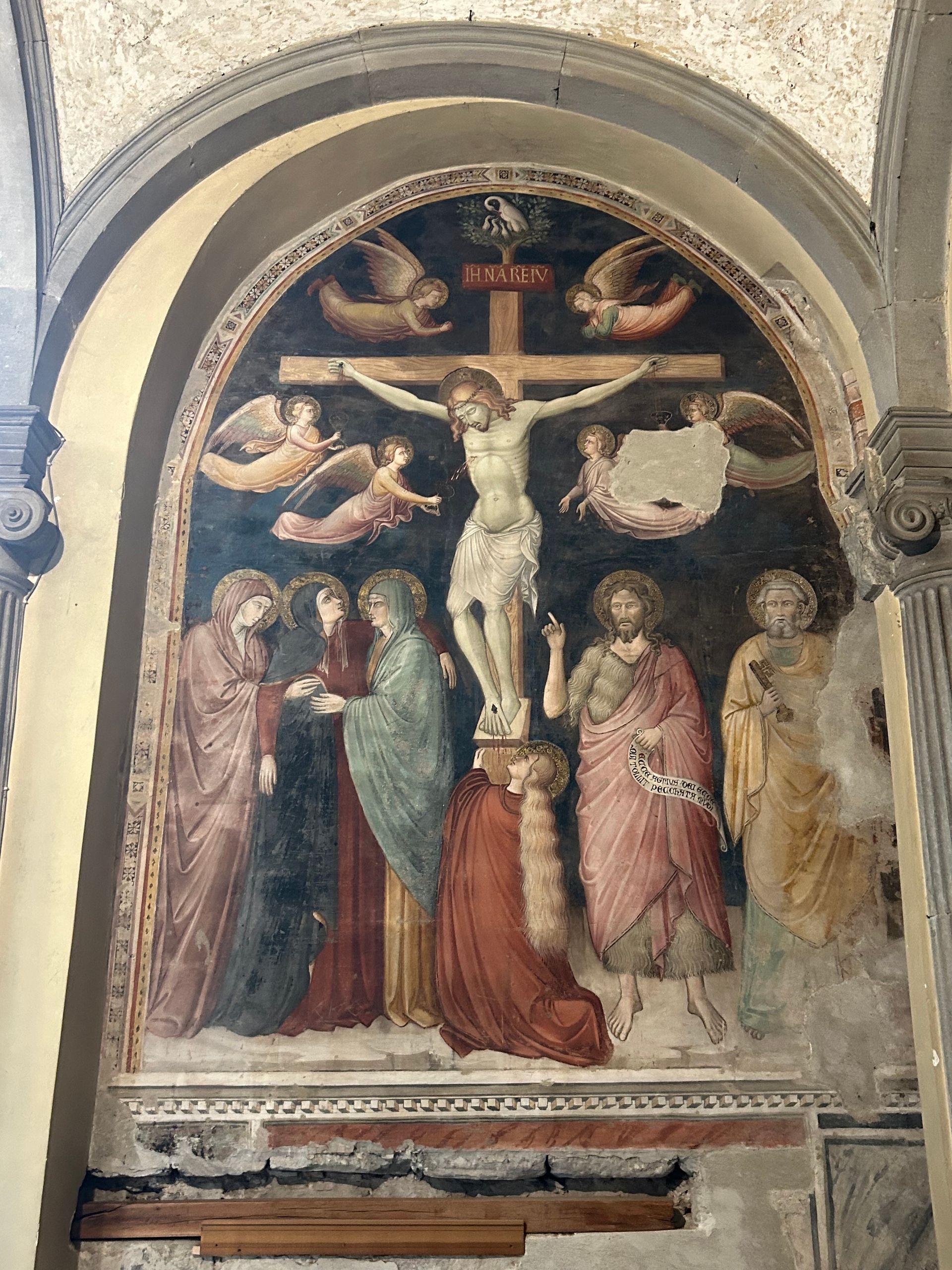
Mary, his beloved mother, had carried this moment in her heart since the night an angel whispered an impossible thing into the darkness of her ordinary life. For thirty-three years she had watched over him, the child she had nursed and raised, the man who spoke in ways that made the air feel different. Now she walked the road to Golgotha with him, step by devastating step. There are no words adequate to the love of a mother who refuses to leave her child even when leaving would be the easier mercy. She stayed. She witnesses. She bore it all with a grace that can only be described as supernatural.
Mary Magdalene, perhaps the most misunderstood woman in all of Christian history, was present as well. She who had been healed of the seven powers of the ego, transformed, and commissioned. She who had sat at his feet as his beloved “koinonos”, partner, and received teaching at a time when women were not considered worthy of such instruction. She who was one of many women who financially supported his mission was always present with him.
The Gospels are quietly radical on this point: she was the first. The first to arrive at the empty tomb in the grey uncertainty of early morning. The first to encounter the risen Christ. The first to be sent to "go and tell” making her not merely a witness but an apostle, the apostle to the apostles, entrusted with the most luminous news in human history.
She was the next in line to spread the Good news eventually to be stymied by a skeptical group of doubters.
Mary of Bethany, sister of Martha and Lazarus, (and most likely was actually Mary Magdalene-scholarship has remained unresolved on this issue) had already offered her profound devotion when she anointed his feet with expensive perfume and wiped them with her hair; an act so intimate, so extravagant in its love, that it scandalized the room. She understood something about what was coming that others could not yet bear to know. Her love was prophetic. And I do believe this was the love of his beloved, Mary Magdalene.
And then there is Veronica, her name meaning “true image”who stepped out from the crowd lining the Via Dolorosa and offered the simplest, most human of gestures. She pressed a cloth to his face, streaked with blood and dust and suffering, and wiped it clean. In that single act of tenderness amidst a gauntlet of cruelty, she reminds us that sometimes love does not look like grand theology. Sometimes love looks like a piece of cloth and the courage to step forward when everyone else steps back.
These women, Mary his mother, Mary Magdalene, Salome, Joanna, and Veronica among them, form a circle of feminine devotion around the most sacred story ever told. They did not theologize. They did not debate. They showed up, they stayed present, and they loved without condition or calculation.
In a world that has so often minimized the feminine voice in spiritual life, their witness endures as its own quiet gospel.
The women stayed. And in staying, they showed us what love, in its fullest and most courageous form, truly looks like.
Notes:
1. parthenogenesis is found across a remarkable range of creatures — Komodo dragons, sharks, pythons, rattlesnakes, zebra sharks, California condors, and many species of bees, wasps, ants, and aphids all demonstrate this capacity to varying degrees.
2. ”The Mystery Tradition of Miraculous Conception: Mary and the Lineage of Virgin Births" and “The Secret Life of Mother Mary” by Marguerite Rigoglioso, Ph.D offers detailed research about Mary’s sacred and unique story.